Corneal Transplantation
How is a donor cornea obtained? (Corneal donation and eye banks)
Written and reviewed by: Prof. Dr. Ercüment Bozkurt, Cataract, Refractive and Cornea Specialist · Batıgöz, Altunizade – Üsküdar / Istanbul · Last updated: 15 November 2026
Corneal donation means that a deceased person allows the transparent front layer of the eye to be used in another patient. The aim is to help maintain or restore visual function. From the moment it is retrieved, the donated tissue is evaluated, stored and delivered to a suitable recipient in a structure called an eye bank. Efforts are made to preserve tissue safety and functionality throughout this process. Corneal donation is not accepted at this centre. Donation and tissue procurement are carried out through authorised eye banks and the relevant official institutions.
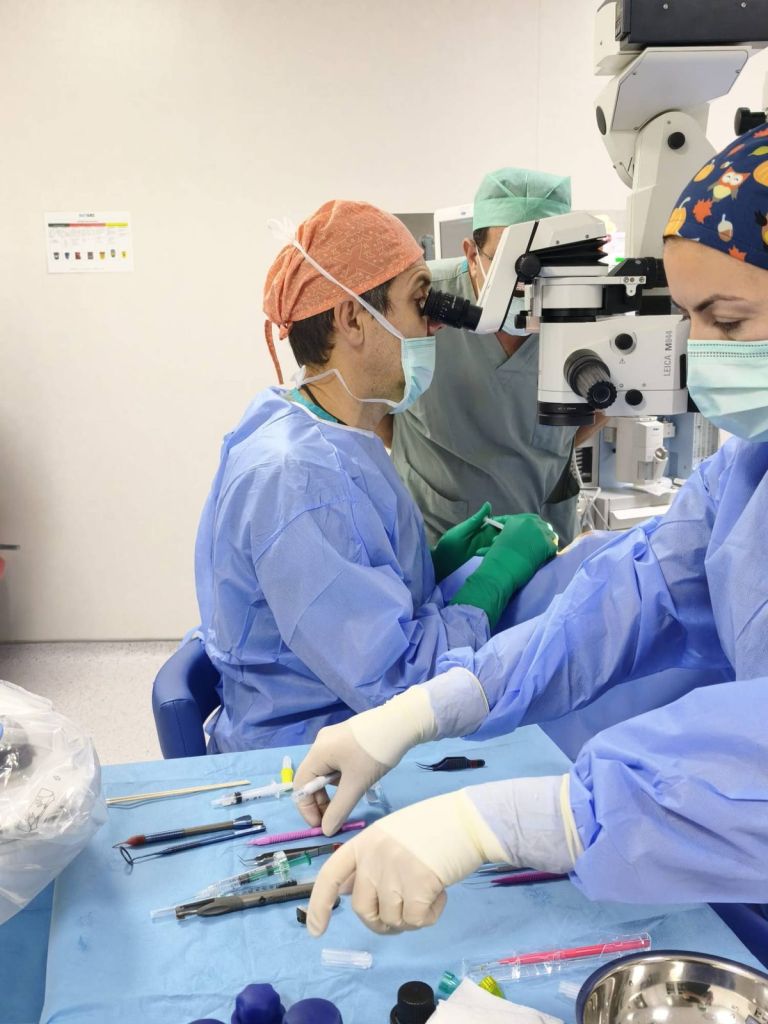
Corneal donation is performed with the consent of the person or the family and after a medical suitability assessment.
The eye bank examines the health and quality of the donated tissue.
The suitable tissue is allocated to a patient waiting for transplantation.
Schematic illustration; not an actual surgical image.
Definition and basic concept
The cornea is one of the most frequently donated tissues. Blood group matching is usually not required and this tissue has a relatively privileged immunological structure. However, not every donation becomes usable. The tissue must undergo a detailed evaluation after retrieval.
When is it considered
Corneal transplantation is considered when corneal transparency or regular structure is permanently impaired. Corneal scars, advanced keratoconus, some congenital corneal opacities, tissue damage that does not heal after severe infection and conditions with loss of endothelial function are among these. In some patients, partial approaches may be considered instead of full-thickness transplantation. In these procedures, only the diseased layer is replaced.
Transplantation may also be considered to reduce pain, preserve ocular integrity or prepare the ground for a further intraocular procedure. It can also improve visual acuity.
Whether a patient is suitable for transplantation does not depend on a single criterion. The physician evaluates the examination findings, the condition of the other ocular structures, intraocular pressure, concomitant systemic diseases and the patient’s expectations together. The physician makes the decision by evaluating the eye as a whole and the patient’s general condition together.
Surgical approach
The transplantation process is a chain that is not limited to the surgical procedure. The steps below describe a general flow. The application may differ in each patient.
- Determining donor suitability: The cause of death, medical history, conditions carrying infection risk and some elements of behavioural history are reviewed. This stage is the first filter for whether the tissue is safe for the recipient.
- Donation intent and legal consent: The person’s donation declaration made during life or the family’s consent after death is obtained within the valid legal framework. This consent forms the ethical basis of the process.
- Tissue retrieval: Eye tissue is retrieved under appropriate conditions and within a defined time interval. During retrieval, preserving tissue integrity and preventing microbiological contamination are essential.
- Evaluation at the eye bank: The tissue undergoes laboratory and biomicroscopic examination to assess suitability for the recipient. Endothelial cell count is an important indicator for the long-term clarity of the graft. Microbiological screening and serological tests are performed to evaluate infection risk.
- Storage: The tissue is stored in different media depending on its type and the planned time of use. Cold storage solutions and organ culture approaches are among these methods. Storage conditions aim to preserve the biological properties of the tissue.
- Recipient matching and transplantation: The tissue is matched with a suitable patient on the waiting list and used in the planned surgical procedure.
Each link in this chain affects the reliability of the next. A problem during tissue retrieval, an uncertainty in laboratory evaluation, or prolonged storage time can directly affect the usability of the tissue.
Advantages and limitations
The main benefit of corneal transplantation is that it can help correct vision loss caused by corneal disease. It may also contribute to pain reduction and preservation of ocular integrity. The risk of graft rejection is relatively low compared with other organ transplants. This is because the cornea has an immunologically privileged structure. Blood group matching is also generally not required in corneal transplantation. With partial approaches, replacing only the diseased layer may be possible in some patients. This can limit surgical trauma.
There are also limitations. The transplant may not improve vision to the expected extent if structures outside the cornea are not healthy. If there is significant functional loss in the retina or optic nerve, the outcome remains limited. Waiting time can vary because tissue availability fluctuates. Over the years, suture loosening, astigmatism, or reduced clarity due to endothelial cell loss may occur. Therefore, regular follow-up after transplantation is necessary.
Possible complications
As with any surgical procedure, some unwanted events may occur after corneal transplantation. Infection, suture-related problems, wound dehiscence, elevated intraocular pressure and endothelial cell loss are among these. Graft rejection is a complication that can occur; its frequency varies with the patient’s risk factors and the type of transplant. Symptoms of rejection include redness, blurred vision, light sensitivity and pain. When these findings appear, an ophthalmologist should be consulted without delay. Astigmatism may affect visual quality, especially after full-thickness transplants. The risk of complications varies depending on the patient’s underlying disease and the regularity of postoperative follow-up.
Postoperative course and follow-up
Regular follow-up examinations are performed in the postoperative period. During these examinations, the physician evaluates corneal clarity, the condition of the sutures, intraocular pressure and any signs of inflammation. Regular use of the drops prescribed by the physician is an important part of the healing process. These drops usually include medications to prevent infection and to control inflammation. The duration and frequency of use vary according to the patient.
There are some points to consider in daily life. The patient should not rub the eye, should protect it from trauma, and should follow hygiene rules carefully. The physician’s recommendations are considered for heavy lifting or activities that may increase intraocular pressure. Healing time varies from patient to patient; visual acuity may stabilise gradually. The time required for suture removal also depends on the patient and the type of transplant performed. Long-term annual follow-up is recommended because the endothelial cell count may decrease over time and this may affect corneal clarity.
Frequently asked questions
Does corneal donation always restore vision?
No. Corneal transplantation can help correct vision loss caused by the cornea. However, the outcome depends on the type of underlying eye disease, the condition of the retina and optic nerve, and postoperative healing. If structures other than the cornea are also unhealthy, visual acuity may remain limited. Therefore, pre-transplant evaluation does not focus only on the cornea.
How long does donated tissue remain suitable?
Tissue usability depends on the storage method and duration. Cold storage solutions and organ culture systems have different validity periods. The eye bank evaluates this period and the tissue quality before releasing the tissue for use. Tissues that are expired or do not meet quality criteria are not used.
Is family consent required in the donation process?
Within the current legal framework, the donation declaration made by the person during their lifetime is taken as the basis. If no such declaration exists, the family’s consent is sought after death. The process is based on informing the family and respecting their decision. The donation decision is voluntary and can be withdrawn.
Whether corneal transplantation is suitable for you cannot be determined without evaluating the structure of your eye, coexisting diseases and your expectations. An ophthalmological examination is required for this assessment.
References
The following resources are compiled from PubMed records.
- Gadhvi KA, Coco G, Pagano L et al. Eye Banking: One Cornea for Multiple Recipients. Cornea 2020;39(12):1599-1603. DOI · PubMed
- Farooq AV, Li J, DeMatteo J et al. HTLV, CMV, and EBV: Implications for Ocular Tissue Transplantation: Report of the Eye Bank Association of America Medical Advisory Board Policy and Position Review Subcommittee. Cornea 2026;45(2):137-140. DOI · PubMed
- Tran LT, Li JY. The role of eye banking with cell-based therapies. Curr Opin Ophthalmol 2023;34(4):334-338. DOI · PubMed
What determines the price of corneal donation and donor supply?
The price of corneal donation and donor supply varies from person to person and case to case. The main factors are:
- Stage and severity of the disease
- Required tests and imaging
- Number of sessions or duration of treatment
- Hospital and operating room where the procedure is performed
- Scope of follow-up and control examinations
Price information is not shared on this page. Personalized information is provided by the appointment office after examination and measurements. You can also contact this office about coverage by health insurance.
Frequently asked questions
Whose consent is required for corneal donation?
Donation is performed within the applicable legal framework, based on a donation declaration made by the person during their lifetime or with the consent of the family after death. This consent forms the ethical basis of the process. A medical suitability assessment is also performed.
What is done before the donated cornea is given to the recipient?
The tissue undergoes laboratory and biomicroscopic examinations at the eye bank. An endothelial cell count is performed; infection risk is evaluated with microbiological screening and serological tests. Tissue found suitable is allocated to a patient awaiting transplantation.
Is blood group compatibility required?
Blood group compatibility is generally not required. The cornea has a relatively immune-privileged structure, and the risk of tissue rejection is relatively low compared with other organ transplants. However, not every donation becomes usable; the tissue undergoes a detailed evaluation.
In which conditions is corneal transplantation considered?
It is considered in conditions that permanently impair corneal transparency or regular structure. Corneal scars, advanced keratoconus, some congenital corneal opacities, persistent tissue damage after severe infection, and conditions in which endothelial function is lost are among them. Suitability is evaluated at the examination.
What does the price of corneal donation and donor supply depend on?
The price of corneal donation and donor supply varies from person to person and case to case. The main factors are: Stage and severity of the disease; Required tests and imaging; Number of sessions or duration of treatment; Hospital and operating room where the procedure is performed; Scope of follow-up and control examinations. Price information is not shared on this page. Personalized information is provided by the appointment office after examination and measurements. You can also contact this office about coverage by health insurance.
Where can I read patient reviews about corneal donation and donor supply?
You can read patient reviews in the patient reviews section at the bottom of this page.
The information on this page is provided for general informational purposes only; diagnosis and treatment decisions are based on examination findings. This content does not replace medical advice.
For appointments and information
You can send your pre-examination questions via WhatsApp or contact us by phone.