
Corneal Transplantation
Follow-up After Corneal Transplantation and Graft Rejection
Written and reviewed by: Prof. Dr. Ercüment Bozkurt, Cataract, Refractive and Cornea Specialist · Batıgöz, Altunizade – Üsküdar / Istanbul · Last updated: 15 November 2026
Corneal transplantation is the replacement of corneal tissue that has lost transparency or become structurally damaged with healthy donor tissue. The cornea is the transparent layer at the front surface of the eye. It is the first structure through which light passes on its way to the retina. Clouding, distortion, or swelling of this layer causes a marked reduction in vision.
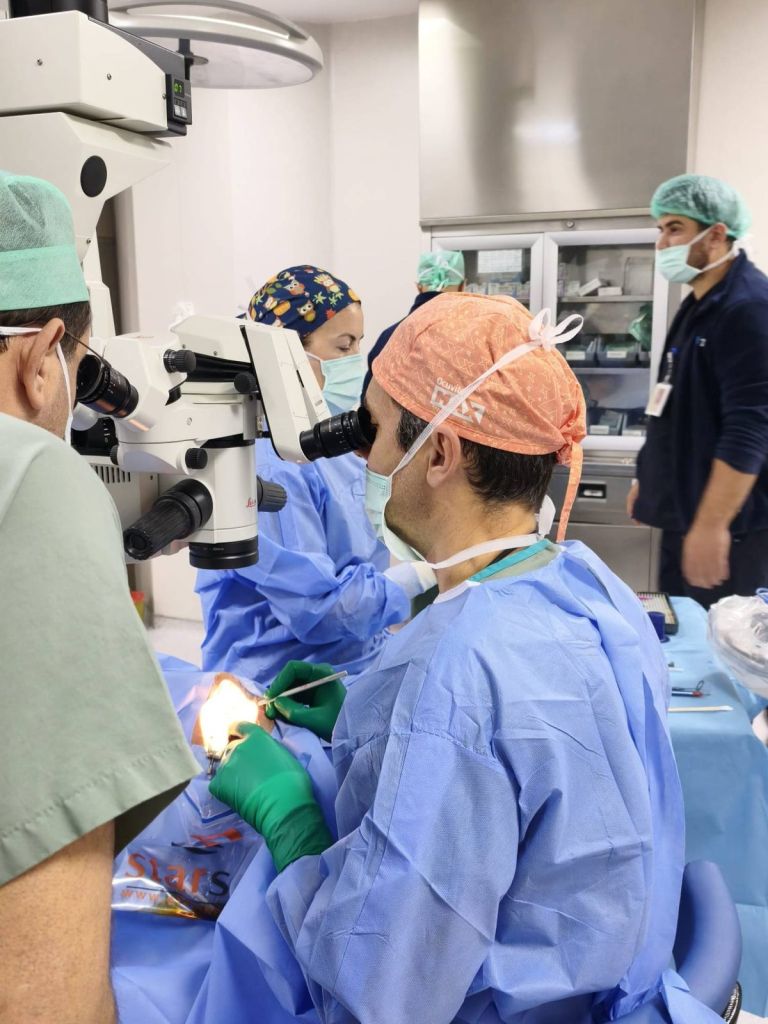
The patient uses regular eye drops while the sutured graft heals.
The physician monitors graft clarity, sutures, and intraocular pressure with regular examinations.
If redness, pain, light sensitivity, or blurred vision occurs, seek care without delay. These findings may suggest graft rejection.
Schematic illustration; not an actual surgical image.
Definition and basic concept
The postoperative period is as important as the surgery itself. The immune system may recognise the donor tissue as foreign and attempt to reject it. In most cases, graft rejection is a process that can be controlled with medication when detected early. Therefore, regular self-monitoring by the patient and timely reporting of symptoms are among the factors that affect the long-term outcome of the transplant.
When is it considered
Corneal transplantation is considered when the cornea has permanently lost its transparency. Corneal edema, progressive scar tissue, damage from recurrent infections, congenital structural abnormalities, and post-traumatic scarring are examples of such conditions. In progressive ectatic disorders such as keratoconus, transplantation is among the options when adequate vision cannot be achieved with glasses or other treatments.
Not every cloudy cornea requires transplantation. The physician decides by evaluating which corneal layer is affected, the condition of the other ocular structures, and the course of the underlying disease. The type of transplantation is also determined based on this assessment. In some cases all corneal layers are replaced. In others, an approach limited to the affected layer is used.
Surgical approach
Corneal transplantation generally involves preparing the donor tissue, removing the affected area from the recipient cornea, and placing and securing the donor tissue. In penetrating keratoplasty all corneal layers are replaced. The donor tissue is secured to the surrounding tissue with sutures. In lamellar keratoplasty only the anterior or posterior corneal layers may be replaced. With this approach the tissue can be positioned with fewer sutures. In some cases, air or similar support is used.
Sutures maintain tissue integrity during the healing process. As healing progresses, the physician can adjust suture tension or remove some sutures. These adjustments affect corneal shape and therefore vision. Therefore, the physician plans them during examinations at regular intervals. Postoperative medications are arranged according to the type of transplantation performed and the condition of the eye.
Advantages and limitations
Corneal transplantation can significantly improve vision in suitable cases where visual loss is due to corneal disease. It can reduce pain and restore corneal integrity. Because the cornea has no blood vessels and the eye is an immune-privileged site, the cornea has more limited contact with the immune system; therefore it is considered to have a relative advantage among transplants. However, the risk of graft rejection is not completely eliminated.
Limitations include the fact that visual improvement may take weeks or months. Irregular astigmatism may develop. Suture-related irritation may occur. Long-term medication use may be needed. Recurrence of the underlying disease or problems in other parts of the eye can limit the visual gain provided by the transplant. For these reasons, transplantation should not be seen as a standalone solution. Instead, it is the beginning of a follow-up process.
Possible complications
Problems that can occur after corneal transplantation include graft rejection, infection, elevated intraocular pressure, suture-related irritation or loosening, wound dehiscence, astigmatism, and irregular corneal surface healing. Graft rejection occurs when the immune system responds to the donor tissue. It may respond to treatment when detected early.
The risk of infection increases when the protective barrier of the corneal surface is disrupted. Elevated intraocular pressure may develop due to the medications used or as a result of changes in the internal structures of the eye. It may damage the optic nerve over time. Therefore, follow-up evaluates the entire eye together with graft clarity.
Postoperative course and follow-up
Follow-up after transplantation continues at regular intervals starting from the first days. Topical steroid drops are used in the early period to control inflammation and reduce the risk of rejection. The physician tapers the dose and frequency of these drops gradually according to the eye’s response. However, in some cases long-term low-dose use may be necessary. To balance the side effects of steroids, the physician may add drops that lower intraocular pressure or other medications. Antibiotic drops may also be used for a certain period to prevent infection.
In penetrating grafts, the physician usually removes or loosens sutures gradually over months. These procedures regularize the corneal shape and improve visual quality. In lamellar grafts, fewer sutures may be needed.
Follow-up examinations evaluate corneal clarity, thickness, vascularization, suture position, and intraocular pressure. The physician also measures visual acuity and refractive errors. Daily self-examination helps the patient detect changes such as redness, pain, light sensitivity, or decreased vision. When these symptoms appear, the patient should consult an ophthalmologist without delay because early treatment of rejection is decisive for graft survival.
Graft rejection is classified as epithelial, stromal, and endothelial according to the affected layer. Epithelial rejection develops in the outermost layer of the cornea. It usually presents with surface irregularity, mild redness, and irritation. Stromal rejection involves the middle layer of the cornea. Corneal opacity, vascularization, and decreased vision may be seen. Endothelial rejection affects the cell layer on the inner surface of the cornea. It may lead to corneal edema and sudden vision loss. Endothelial rejection requires urgent evaluation because it can progress more rapidly than the other types.
Symptoms include ocular redness, pain, light sensitivity, blurred vision, a foreign body sensation, and reduced visual acuity. Some of these symptoms may also overlap with other problems such as infection or elevated intraocular pressure. The physician makes the distinction by examination.
Risk factors include corneal vascularization, previous transplantation, active or previous inflammation, ocular surface disease, and underlying systemic conditions. The presence of vascularization may facilitate access of immune cells to the donor tissue. The risk of rejection increases in repeat transplants. Keeping inflammation under control is one of the main goals of the follow-up process. Infection and elevated intraocular pressure are also monitored because they can threaten both the health of the graft and the eye as a whole. Signs of infection include increasing redness, pain, discharge, and reduced vision. Elevated intraocular pressure is often silent; therefore, regular measurement is important.
Long-term follow-up continues after the first year of transplantation. Even if medication doses are reduced, follow-up visits need to continue at certain intervals. Changes in the structure of the eye and in vision may be early signs of rejection or other problems even years later. Patient adherence to the follow-up plan is one of the patient-related factors that affects the long-term outcomes of transplantation.
Frequently asked questions
Which symptoms after transplantation require urgent evaluation?
Marked redness in the eye, increasing pain, light sensitivity, sudden blurring or decreased vision, discharge from the eye, and swelling of the eyelids are among the conditions requiring urgent evaluation. These symptoms may indicate different problems such as graft rejection, infection, or elevated intraocular pressure. Even if the symptoms seem mild, it is recommended to consult an ophthalmologist rather than waiting.
How long are steroid drops used?
The duration and dose of topical steroids depend on the type of transplant performed, the eye’s response, and the risk of rejection. They are used more frequently in the early period, and the dose is reduced as follow-up progresses. In some cases, a low dose may need to be continued for a long time. The duration of use is individualized and determined by the physician’s assessment.
Does graft rejection always result in vision loss?
No. Graft rejection can be controlled when detected early and treated appropriately. The affected layer, the speed of intervention, and the presence of accompanying problems affect the outcome. Therefore, reporting symptoms promptly and attending follow-up examinations is important.
Follow-up after corneal transplantation is an individualized process, and each patient’s situation is different. If you notice a change in your eye or have questions about your follow-up plan, consulting an ophthalmologist is the most appropriate step for an evaluation specific to you.
References
The following resources are compiled from PubMed records.
- Mandal S, Maharana PK, Kaweri L et al. Management and prevention of corneal graft rejection. Indian J Ophthalmol 2023;71(9):3149-59. DOI · PubMed
- Azevedo Magalhaes O, Shalaby Bardan A, Zarei-Ghanavati M et al. Literature review and suggested protocol for prevention and treatment of corneal graft rejection. Eye (Lond) 2020;34(3):442-50. DOI · PubMed
- Yin J. Advances in corneal graft rejection. Curr Opin Ophthalmol 2021;32(4):331-7. DOI · PubMed
- Feizi S, Hatami F, Mirzaei SK et al. Medical and surgical approaches to prevent corneal graft rejection in high-risk recipients. Surv Ophthalmol 2026;71(2):674-84. DOI · PubMed
What determines the price of follow-up after corneal transplantation and graft rejection?
The price of follow-up after corneal transplantation and graft rejection varies from person to person and case to case. The main factors are:
- Stage and severity of the disease
- Required tests and imaging
- Number of sessions or duration of treatment
- Hospital and operating room where the procedure is performed
- Scope of follow-up and control examinations
Price information is not shared on this page. Personalized information is provided by the appointment office after examination and measurements. You can also contact this office about coverage by health insurance.
Frequently asked questions
Which symptoms after transplantation suggest graft rejection?
Redness, pain, light sensitivity, and blurred vision may suggest graft rejection. When these symptoms occur, an ophthalmologist should be consulted without delay. Some of these symptoms may also overlap with other problems such as infection or elevated intraocular pressure. The physician makes the distinction by examination.
What are eye drops used for after transplantation?
In the early period, topical steroid drops are used to control inflammation and reduce the risk of rejection. The physician tapers the dose and frequency gradually according to the response of the eye. In some cases, a low dose may be continued for a long time. Drops that lower intraocular pressure or other medications may be added to balance the side effects of steroids. Antibiotic drops may also be used for a certain period to protect against infection.
What is evaluated at follow-up visits after corneal transplantation?
At follow-up examinations, the physician evaluates corneal clarity, corneal thickness, vascularization, suture position, and intraocular pressure. Visual acuity and refractive errors are also measured. Suture tension may be adjusted or selected sutures may be removed. These adjustments are planned during examinations at specific intervals.
What does the price of follow-up after corneal transplantation and graft rejection depend on?
The price of follow-up after corneal transplantation and graft rejection varies from person to person and case to case. The main factors are: Stage and severity of the disease; Required tests and imaging; Number of sessions or duration of treatment; Hospital and operating room where the procedure is performed; Scope of follow-up and control examinations. Price information is not shared on this page. Personalized information is provided by the appointment office after examination and measurements. You can also contact this office about coverage by health insurance.
Where can I read patient reviews about follow-up after corneal transplantation and graft rejection?
You can read patient reviews in the patient reviews section at the bottom of this page.
The information on this page is provided for general informational purposes only; diagnosis and treatment decisions are based on examination findings. This content does not replace medical advice.
For appointments and information
You can send your pre-examination questions via WhatsApp or contact us by phone.