
Prof. Dr. Ercüment Bozkurt
Trabeculectomy (Glaucoma Surgery with Mitomycin C)
Written and reviewed by: Prof. Dr. Ercüment Bozkurt, Cataract, Refractive and Cornea Specialist · Batıgöz, Altunizade – Üsküdar / Istanbul · Last updated: 15 November 2026
Trabeculectomy is a filtering surgical procedure. It aims to drain aqueous humor out of the eye through a new drainage pathway created under the conjunctiva. The underlying idea is to open an additional outflow channel to lower intraocular pressure when the natural drainage system is insufficient.
When the natural drainage pathway is inadequate, intraocular pressure rises. Medication or laser may not be enough.
The surgeon prepares a thin flap in the sclera. A small opening beneath it creates a new outflow pathway for the fluid.
The fluid filters into a small cushion under the conjunctiva, called a bleb, and is absorbed there. Therefore, the pressure decreases. Close follow-up is required during the healing process.
Schematic illustration; not an actual surgical image.
Trabeculectomy (glaucoma surgery with mitomycin C)
Mitomycin C is an agent applied locally during surgery. It limits wound healing in the tissues around the scleral flap (drainage flap) and helps maintain the patency of the drainage pathway. It is commonly mentioned together with this procedure.
Definition and basic concept
Intraocular pressure depends on the balance between aqueous humor production and drainage. In glaucoma, this balance is most often disrupted on the drainage side. In trabeculectomy, the surgeon opens a small window in the sclera. This creates a passage between the anterior chamber and the subconjunctival space under the conjunctiva. The fluid exits through this new pathway and accumulates in the subconjunctival space, where it is absorbed. This accumulation may be seen clinically as an elevation called a bleb.
Surgical success depends closely on the filtration pathway remaining open in the early postoperative period. During wound healing, fibroblasts and scar tissue can occlude the filtering area. Mitomycin C is applied briefly under the scleral bed and conjunctiva to limit this healing response. Its effect is related to the dose and application time. Keeping the residual tissue amount limited is important to prevent unwanted thinning and late complications.
Adjuvant approaches such as intracameral triamcinolone can also be used during surgery to improve visibility and help control the inflammatory response in the anterior chamber. These applications do not change the basic rationale of the procedure. They serve to protect the filtration pathway and allow better interpretation of early follow-up.
When is it considered
Trabeculectomy is generally considered in advanced glaucoma cases where medications and laser procedures have not achieved the target. Filtering surgery is among the options when visual field loss has accelerated, optic nerve damage has become evident, or the target intraocular pressure needs to be kept low. In some cases, it can be planned together with cataract surgery. In other cases, the physician may prefer to address the cataract first and reassess the glaucoma course.
The patient’s general health status, current medications, anterior chamber depth, conjunctival quality, and previous eye surgeries are determining factors in the decision process. The behavior of filtering surgery may differ in eyes with conjunctival scarring. The physician determines the appropriate method for each patient by evaluating examination findings and the target pressure level together.
Surgical approach (conceptual)
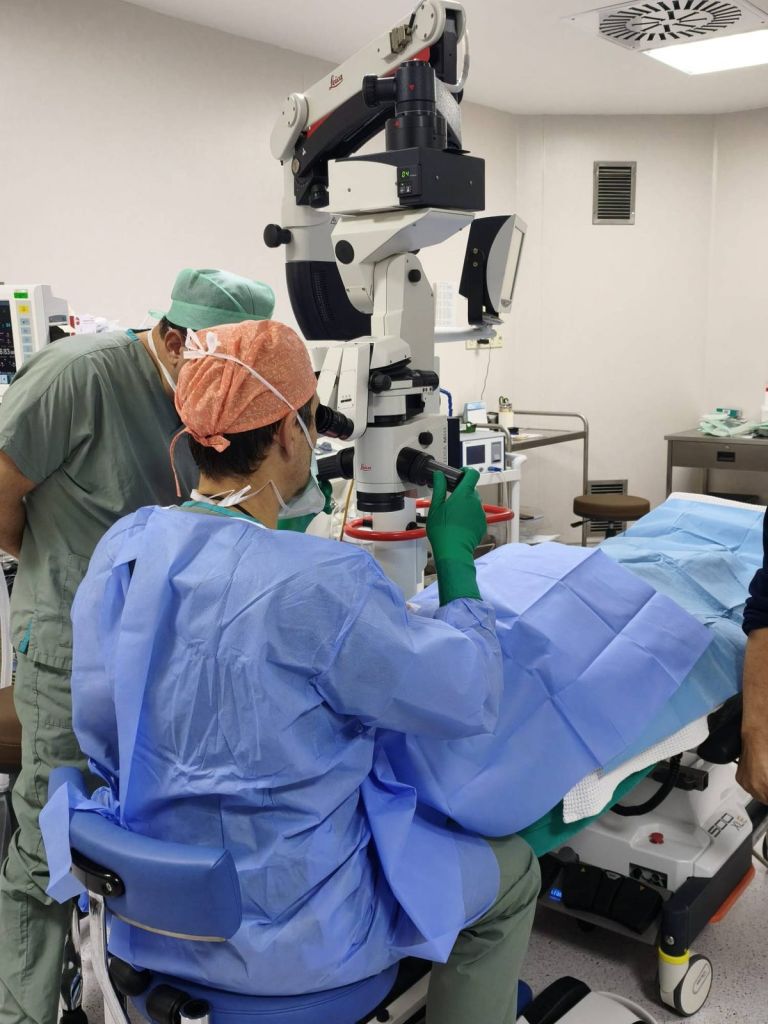
The procedure is usually performed under regional anesthesia. The conjunctiva is opened to expose the scleral surface. A partial-thickness flap is prepared on the sclera, and a small window providing access to the anterior chamber is created beneath this flap. Mitomycin C is applied to this area at a specific concentration and for a specific duration to limit wound healing. The area is then irrigated appropriately. The scleral flap is repositioned and the conjunctiva is closed with sutures.
Early function of the filtering pathway depends on the passage of fluid from the anterior chamber into the subconjunctival space. The rate of this passage is related to the tension of the scleral flap and the condition of the sutures. Suture adjustment may be considered during or after surgery when drainage is excessive or insufficient. Excessive drainage can lead to shallowing of the anterior chamber. Insufficient drainage makes pressure control more difficult. Therefore, surgery is not simply a procedure that creates an opening. It is a process in which flow balance is carefully established.
The use of mitomycin C is an important variable that affects the behavior of filtering surgery. Suppression of scar tissue can contribute to bleb survival. However, excessive effect can predispose to tissue thinning and late complications. This balance is managed through technical details such as application time and localized irrigation. Adjunctive applications such as intracameral triamcinolone can support the visibility of structures during surgery and the control of inflammation after surgery.
Advantages and limitations
The main advantage of trabeculectomy is that it is an established method capable of producing a marked reduction in intraocular pressure. This feature becomes important in advanced glaucoma cases where the target pressure needs to be kept low. Its ability to reduce dependence on medication and contribute to long-term pressure control are also among the reasons it remains a surgical option.
Its limitations include the need for close monitoring during the healing process, variability in bleb behavior from person to person, and the possible need for additional interventions in some cases. Filtering surgery is directly affected by the biological response of the conjunctival and scleral tissue. Therefore, outcomes are not assessed by a single criterion. Pressure control, bleb appearance, and visual function are evaluated together. Minimally invasive glaucoma surgery options such as GATT act through different drainage mechanisms. The appropriate method is determined together with the stage of glaucoma and the structural characteristics of the eye.
Possible complications
As with any surgical procedure, trabeculectomy carries certain risks. Hypotony, meaning an excessive drop in intraocular pressure, can develop in the early period due to over-drainage and may be associated with shallowing of the anterior chamber. The risk of infection is carefully monitored in filtering surgery because the bleb area is in contact with the external environment. Bleb inflammation or more serious conditions can occur, although rarely.
Bleb-related problems include bleb leakage, an excessively elevated or thinned bleb, and loss of function due to scar tissue. Cataract formation or progression of an existing cataract is among the conditions seen especially after filtering surgery. Very high or very low intraocular pressure can have temporary effects on vision. These risks do not carry the same weight for every patient. They are related to the structural characteristics of the eye and coexisting conditions. This statement does not constitute a guarantee.
Postoperative course and follow-up
In the postoperative period, bleb care is among the factors that influence the course of filtering surgery. Protecting the eye, reducing the risk of infection, and avoiding unnecessary pressure on the bleb area are recommended. Eye drops are usually used in a specific regimen to control inflammation and protect against infection. The physician adjusts the duration and frequency of use according to examination findings.
At follow-up visits, the physician evaluates intraocular pressure, anterior chamber depth, bleb appearance, and the condition of the sutures. Suture adjustment may be considered when drainage is excessive or insufficient. In some cases, additional interventions such as laser suture lysis may be required. When pressure control cannot be achieved, the physician evaluates additional medical treatment or further surgical options. Because the healing process varies from person to person, the physician determines the frequency and content of follow-up according to the patient’s course.
Frequently asked questions
Does trabeculectomy completely eliminate glaucoma?
Glaucoma is a chronic condition because of its effects on the optic nerve. Trabeculectomy aims to lower intraocular pressure and help keep this pressure under control. Follow-up and treatment requirements continue after surgery. Therefore, regular examinations are important to maintain pressure control.
Why is mitomycin C used, and is it applied in every patient?
Mitomycin C is used to limit scar tissue formation at the filtering site. The physician evaluates the decision to use it together with factors such as the tissue characteristics of the eye, previous surgeries, and the target pressure level. The same approach is not suitable for every patient. The physician determines the duration of use and details of the local application within the surgical plan.
How does it differ from methods such as GATT?
GATT is a minimally invasive option that addresses the natural drainage pathways with a different approach. Trabeculectomy creates a new drainage pathway under the conjunctiva, and bleb formation is a natural part of this procedure. The two approaches differ in their mechanisms of action, follow-up requirements, and possible complication profiles. The physician assesses suitability together with the stage of glaucoma and the structural characteristics of the eye.
The physician decides on trabeculectomy and the use of mitomycin C individually after evaluating the structural characteristics of your eye and the course of your glaucoma. An eye examination is required to determine the appropriate options.
Related pages
- Main heading: Glaucoma: Diagnosis, medical, laser, and surgical treatment in glaucoma.
- GATT: minimally invasive glaucoma surgery that opens the trabecular meshwork with a suture.
- SLT (Selective Laser Trabeculoplasty): laser treatment performed in the outpatient clinic for open-angle glaucoma.
Listen to the Professor
Short videos by Prof. Dr. Ercüment Bozkurt on this topic. Clicking a video opens it on this page.
References
The following resources are compiled from PubMed records.
- Ghirardi A, Fan S, Mercieca K et al. Comparison of Methods to Deliver Mitomycin C in Trabeculectomy Surgery: A Systematic Review and Meta-Analysis. Ophthalmol Glaucoma 2025;8(5):503-514. DOI · PubMed
- Park J, Rittiphairoj T, Wang X et al. Device-modified trabeculectomy for glaucoma. Cochrane Database Syst Rev 2023;3:CD010472. DOI · PubMed
- Gaban N, Pelison G, Binotti WW et al. Intraoperative Injection Versus Sponge-Applied Mitomycin C During Trabeculectomy In Glaucoma: A Systematic Review and Meta-Analysis. J Glaucoma 2025;34(12):1003-1016. DOI · PubMed
- Han L, Mao Y, Sang Q et al. Efficacy and complications of microcatheter-assisted minimally invasive glaucoma surgery for open-angle glaucoma: A systematic review and network meta-analysis. Surv Ophthalmol 2025;70(6):1035-1042. DOI · PubMed
- Alagöz N, Alagöz C, Yıldırım Y et al. The Effect of Adjuvant Intracameral Triamcinolone Acetonide on the Surgical Results of Trabeculectomy with Mitomycin C. Turk J Ophthalmol 2016;46(4):169-174. DOI · PubMed
- Olgun A, Celik HU, Yenihayat F et al. Efficacy comparison of combined trabeculectomy with MMC and gonioscopy-assisted transluminal trabeculotomy. Int Ophthalmol 2022;42(6):1711-1718. DOI · PubMed
What determines the price of trabeculectomy?
The price of trabeculectomy varies from person to person and case to case. The main factors are:
- Stage and severity of the disease
- Required tests and imaging
- Number of sessions or duration of treatment
- Hospital and operating room where the procedure is performed
- Scope of follow-up and control examinations
Price information is not shared on this page. Personalized information is provided by the appointment office after examination and measurements. You can also contact this office about coverage by health insurance.
Frequently asked questions
Why is trabeculectomy performed?
When the natural drainage pathway is insufficient, intraocular pressure rises, and medication or laser may not be enough. Trabeculectomy is generally considered in advanced glaucoma cases where target pressure cannot be achieved with medications and laser applications. It is among the filtering surgical options when visual field loss has accelerated, optic nerve damage has become more evident, or the target intraocular pressure needs to be kept low.
What does mitomycin C do in this surgery?
Mitomycin C is an agent applied locally during surgery to help maintain the patency of the drainage pathway by limiting wound healing in the tissues around the scleral flap (drainage flap). During wound healing, fibroblasts and scar tissue can block the filtering area; mitomycin C is used briefly under the scleral bed and conjunctiva to limit this healing response. Its effect is related to the dose and application time.
What should be considered after surgery?
Close follow-up is required during the healing process. In the postoperative period, bleb care is among the topics that affect the course of filtering surgery. The physician does not monitor outcomes by a single criterion; pressure control, bleb appearance, and visual function are evaluated together.
Does trabeculectomy have risks?
As with any surgical procedure, trabeculectomy carries certain risks. Hypotony may develop in the early period due to excessive drainage and may be associated with shallowing of the anterior chamber. Infection risk, bleb leak, an excessively elevated or thinned bleb, and loss of function due to scar tissue are among the conditions that may be observed. These risks are not equally weighted for every patient.
What does the price of trabeculectomy depend on?
The price of trabeculectomy varies from person to person and case to case. The main factors are: Stage and severity of the disease; Required tests and imaging; Number of sessions or duration of treatment; Hospital and operating room where the procedure is performed; Scope of follow-up and control examinations. Price information is not shared on this page. Personalized information is provided by the appointment office after examination and measurements. You can also contact this office about coverage by health insurance.
Where can I read patient reviews about trabeculectomy?
You can read patient reviews in the patient reviews section at the bottom of this page.
The information on this page is provided for general informational purposes only; diagnosis and treatment decisions are based on examination findings. This content does not replace medical advice.
For appointments and information
You can send your pre-examination questions via WhatsApp or contact us by phone.